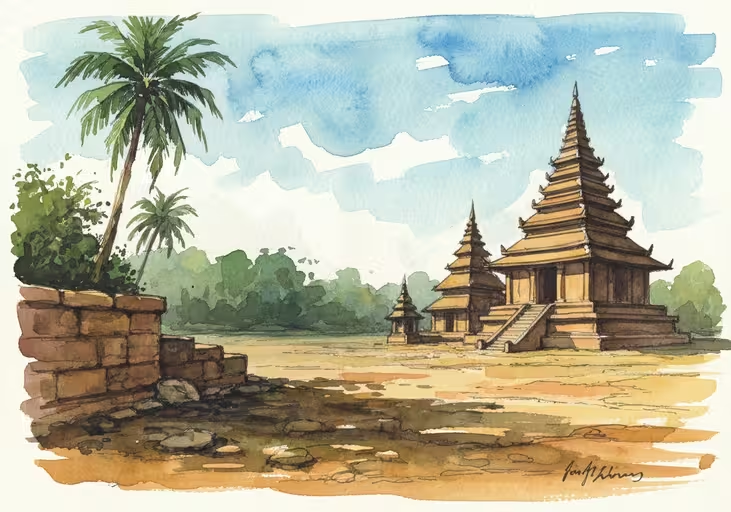
By the mid-18th century, Buddhism in Sri Lanka had reached a low point. The lineage of higher ordination (Upasampada) had been broken, and there were no fully ordained monks left on the island. The religion was kept alive by Ganinnanses, lay priests who observed only a few precepts.
A Crisis of Faith
Realizing the gravity of the situation, a dedicated monk named Weliwita Sri Saranankara Thera took it upon himself to restore the Sangha. With the patronage of King Kirti Sri Rajasinha, he sent emissaries to the Buddhist kingdom of Siam (Thailand) to request help.
The Mission from Siam
In 1753 AD, a delegation of Siamese monks led by the Venerable Upali Thera arrived in Kandy. They were received with great honor by the king and the people. In a historic ceremony at the Malwathu Maha Viharaya, they conferred the higher ordination on a group of Sinhalese novices, including Saranankara Thera.
The Revival of the Sangha
This event marked the establishment of the Siam Nikaya (Siam Sect), which remains the largest Buddhist monastic order in Sri Lanka today. It sparked a religious renaissance, leading to the restoration of temples, the writing of new books, and a renewed interest in Buddhist education. This is the origin of the Siam Nikaya of Buddhist monks.