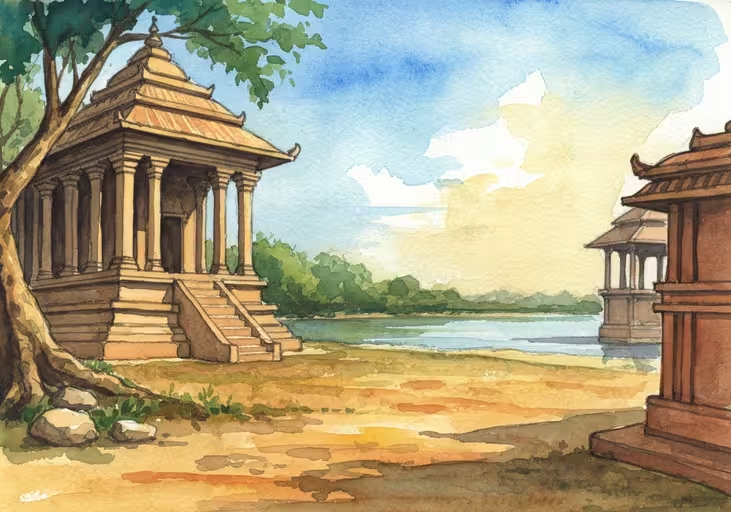
The year 1619 AD witnessed the tragic end of the Kingdom of Jaffna, the last independent Tamil kingdom in Sri Lanka. After centuries of existence, the kingdom succumbed to the expanding power of the Portuguese Empire.
The Last Tamil Kingdom
For centuries, the Kingdom of Jaffna had maintained its independence in the northern peninsula, thriving on trade and a distinct cultural identity. However, internal power struggles and the growing Portuguese presence in the region weakened its foundations.
The Portuguese Conquest
The final blow came when the Portuguese, led by Filipe de Oliveira, launched a full-scale invasion. The last king, Cankili II, fought bravely but was defeated. He was captured and taken to Goa, where he was executed, ending the Aryacakravarti dynasty.
The End of an Era
The fall of Jaffna marked the complete subjugation of the island’s coastal regions by the Portuguese. The northern peninsula was integrated into the Portuguese administration, leading to significant cultural and religious changes, including the destruction of Hindu temples and the spread of Catholicism.