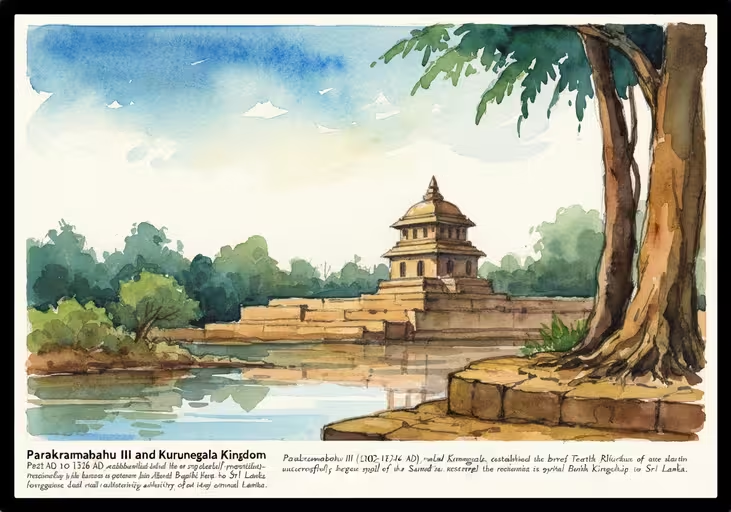
King Parakramabahu III (1287–1293 AD) ascended the throne at a critical juncture in Sri Lankan history. The Sacred Tooth Relic had been captured by the Pandyans, and the Sinhalese kingdom was in a state of disarray. Unlike his warrior predecessors, Parakramabahu III relied on diplomacy to restore the nation’s honor.
The Diplomat King
Recognizing that a military campaign against the powerful Pandyan Empire would be futile, Parakramabahu III traveled to the Pandyan capital of Madurai. Through skillful negotiation and by emphasizing the shared cultural and religious ties between the two kingdoms, he persuaded the Pandyan king to return the Sacred Tooth Relic.
The Return of the Relic
The recovery of the Tooth Relic was a major triumph. Parakramabahu III brought the sacred object back to Sri Lanka and enshrined it in the ancient capital of Polonnaruwa, briefly restoring the city’s status as the religious center of the island.
The Shift to Kurunegala
Although Parakramabahu III ruled from Polonnaruwa, his reign paved the way for the rise of Kurunegala as the next capital. His successor, Bhuvanekabahu II, would formally move the seat of power to Kurunegala, marking the beginning of a new era in Sinhalese history.