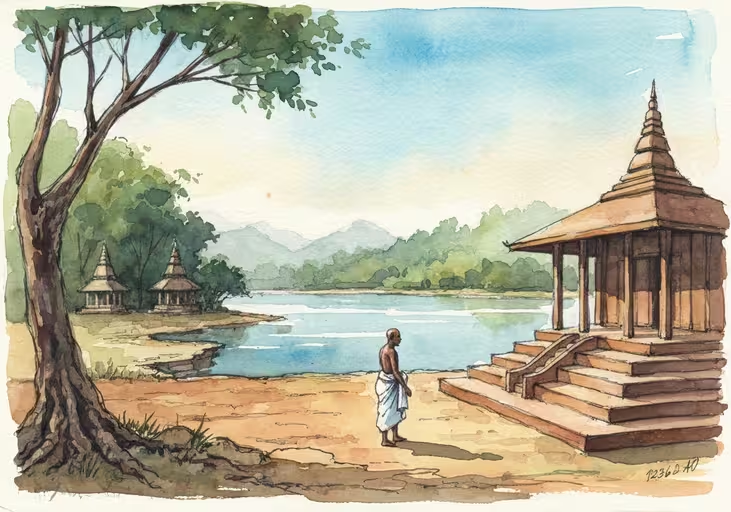
The early 13th century was a perilous time for Buddhism in Sri Lanka. The brutal invasion of Kalinga Magha had not only destroyed temples but also disrupted the Upasampada (higher ordination) lineage, threatening the very existence of the Sangha. In this hour of need, help came from an unexpected source: Kanchipuram in South India.
A Crisis of Faith
The destruction of the Maha Vihara and the persecution of monks by Magha had left the Sri Lankan Sangha in disarray. Without a sufficient number of higher-ordained monks to perform the necessary rites, the lineage was in danger of dying out. King Vijayabahu III, ruling from Dambadeniya, recognized that restoring the Sangha was essential for the legitimacy of his rule and the spiritual well-being of his people.
The Mission from Kanchipuram
Kanchipuram was a thriving center of Theravada Buddhism at the time. Responding to the call from Sri Lanka, a delegation of learned Bhikkhus traveled across the Palk Strait. They brought with them not just the authority to ordain but also deep scriptural knowledge. Their arrival allowed for the re-establishment of the Upasampada, breathing new life into the Sri Lankan monastic order.
A Lasting Bond
This event highlights the deep and often overlooked cultural and religious ties between Sri Lanka and South India. Far from being solely a source of conflict, South India was also a reservoir of Buddhist learning that helped sustain the faith in Sri Lanka during its darkest hours.