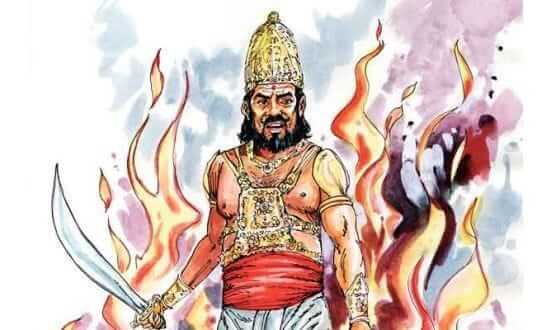
In 1215 AD, a dark cloud descended upon Sri Lanka. Kalinga Magha, a prince from Kalinga (modern-day Odisha, India), landed with a massive army of 24,000 soldiers. His invasion would prove to be one of the most destructive in the island’s history, marking the final collapse of the great hydraulic civilization of the north.
The Tyrant of Polonnaruwa
Magha was not just a conqueror; he was a destroyer. The Culavamsa describes him as an “unjust king” who ruled with an iron fist. Unlike previous invaders who often assimilated or respected local customs, Magha systematically dismantled the existing social and religious order. He blinded the reigning king, Parakrama Pandyan II, and seized the throne of Polonnaruwa.
A Reign of Terror
Magha’s rule was characterized by widespread persecution. He targeted the Buddhist Sangha, destroying libraries, looting temples, and converting stupas into military outposts. The sacred Tooth Relic had to be hidden away in the mountains to protect it from his wrath. His soldiers plundered the wealth of the nobility and commoners alike, leading to a mass exodus of people from the capital.
The Collapse of Rajarata
The most lasting impact of Magha’s invasion was the destruction of the irrigation network. The complex system of tanks and canals that sustained the dry zone (Rajarata) fell into disrepair or was deliberately sabotaged. This ecological disaster, combined with the political chaos, forced the Sinhalese population to migrate to the wet zone in the southwest, leaving the ancient cities of Anuradhapura and Polonnaruwa to be swallowed by the jungle.