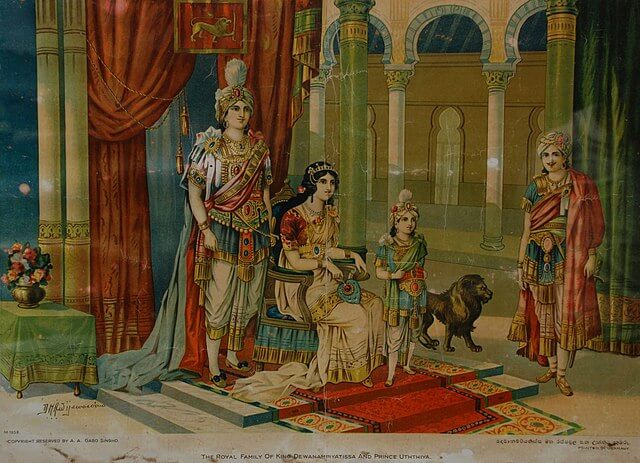
King Devanampiya Tissa (307–267 BC) stands as one of the most pivotal figures in Sri Lankan history. His reign marked the official introduction of Buddhism to the island, a turning point that would shape the nation’s culture, art, and identity for over two millennia.
The Beloved of the Gods
Even before his conversion, Tissa was known for his piety and wisdom, earning the title Devanampiya (“Beloved of the Gods”). He maintained a close diplomatic friendship with the Indian Emperor Ashoka, exchanging gifts and envoys. It was Ashoka who first urged Tissa to seek refuge in the Buddha, Dhamma, and Sangha.
The Arrival of Buddhism
The defining moment of his reign occurred during a royal hunt at Mihintale. There, he met Arahat Mahinda, Ashoka’s son. After a dialogue that tested the king’s intelligence, Tissa embraced the new faith. He didn’t just convert personally; he made Buddhism the state religion, donating the Mahamegha Gardens to the Sangha to establish the Mahavihara, the center of Theravada orthodoxy.
A Legacy of Faith
Devanampiya Tissa was a prolific builder. He enshrined the Buddha’s collarbone relic in the Thuparamaya, the first stupa built in Sri Lanka. He also planted the sacred Jaya Siri Maha Bodhi sapling brought by Sanghamitta Theri. His reign laid the spiritual and physical foundations of a Buddhist civilization that continues to thrive today.