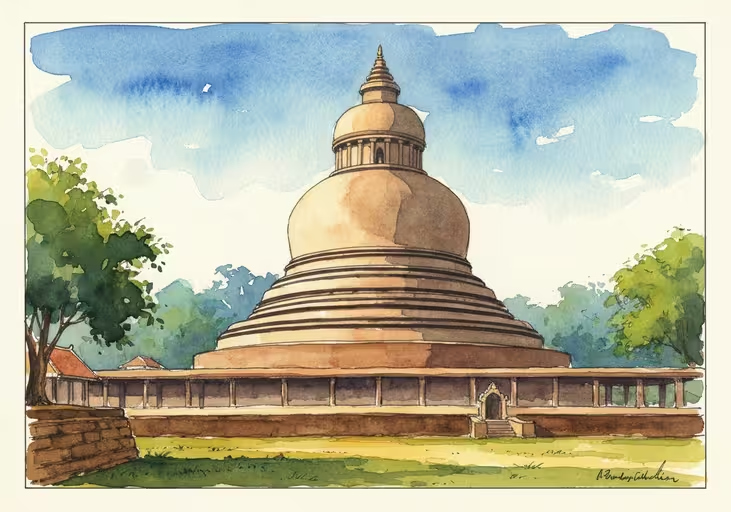
The Ruwanwelisaya, also known as the Maha Thupa (Great Stupa), is the crown jewel of Anuradhapura’s sacred architecture. Commissioned by King Dutugemunu after his unification of Sri Lanka, it stands not only as a place of veneration but as a colossal monument to the peace and prosperity he brought to the island.
A Monument to Unity
Following the defeat of the Chola King Elara, Dutugemunu sought to heal the scars of war through religious devotion. The construction of the Ruwanwelisaya was a national project in the truest sense. Historical records from the Mahavamsa indicate that the king did not use forced labor. Instead, he paid every worker, from the architects to the bricklayers, ensuring that the merit of the construction was shared by all his subjects.
Engineering Marvels
The engineering behind the Ruwanwelisaya was centuries ahead of its time. The foundation alone was a massive undertaking. To prevent the massive structure from sinking, the builders dug a pit 7 cubits deep (approx. 10.5 feet). They filled it with round stones, which were then crushed and compacted by elephants whose feet were bound in leather to protect them.
On top of this stone base, layers of “butter clay” (fine river clay), bricks, and a network of iron mesh were laid to create a stable platform. The stupa itself was designed in the shape of a water bubble (bubbulakara), symbolizing the impermanence of life. Originally standing at 180 feet (now 338 feet after restoration), it enshrined the largest collection of the Buddha’s relics anywhere in the world.
The King’s Last Wish
The story of the Ruwanwelisaya is also a tragedy. King Dutugemunu fell ill before the work was completed. Desperate to see his masterpiece finished, his brother Saddhatissa covered the unfinished dome with white cloth and constructed a bamboo spire to simulate the completed stupa. Lying on his deathbed, the king gazed upon the “finished” monument, rejoicing in his final act of merit before passing away.
Today, the Ruwanwelisaya remains one of the Solosmasthana (16 sacred places) and a beacon for Buddhists worldwide, its white dome gleaming as a testament to a warrior king’s devotion.