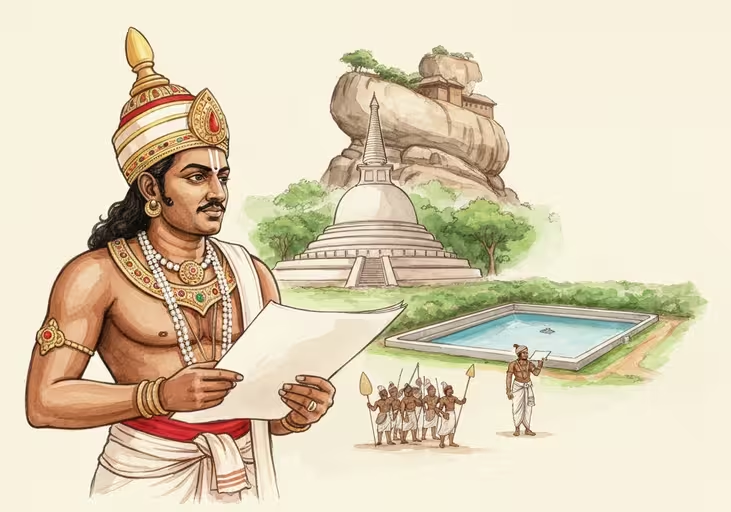
King Uttiya was an important monarch who ruled Sri Lanka from 267 BCE to 257 BCE, making Anuradhapura the capital of the Rajarata Kingdom. His ten-year reign is associated with a significant event in the early Buddhist history of Sri Lanka.
Accession to the Throne and Rule
King Uttiya ascended the throne of the Rajarata Kingdom in 267 BCE. He governed the kingdom for ten years, with the city of Anuradhapura as his capital. Although detailed information about his reign is not extensively mentioned in historical texts like the Mahavamsa, it is believed that he reigned during a peaceful era not long after Buddhism was established in Sri Lanka.
The Passing of Arahant Mahinda Thero
One of the most prominent events during King Uttiya’s reign was the passing of Arahant Mahinda Thero. His demise occurred in the tenth year of King Uttiya’s rule. This event is considered a significant milestone in the Buddhist history of Sri Lanka. Arahant Mahinda Thero was a pioneer in bringing Buddhism to Lanka, and after his passing, his body was honored, and a funeral ceremony (Parinirvana Mangalya) was held near the Malwathu Oya before his interment, all occurring during King Uttiya’s reign. Due to this historical significance, King Uttiya’s reign is particularly remembered among the Buddhist people.
Legacy
King Uttiya’s legacy is primarily linked to the passing of Arahant Mahinda Thero during his reign. This event belongs to the early period of Buddhism in Sri Lanka, and King Uttiya has been recorded in history as the ruler of that significant historical chapter. His reign can be considered a period when Buddhism in Sri Lanka further stabilized and strengthened.