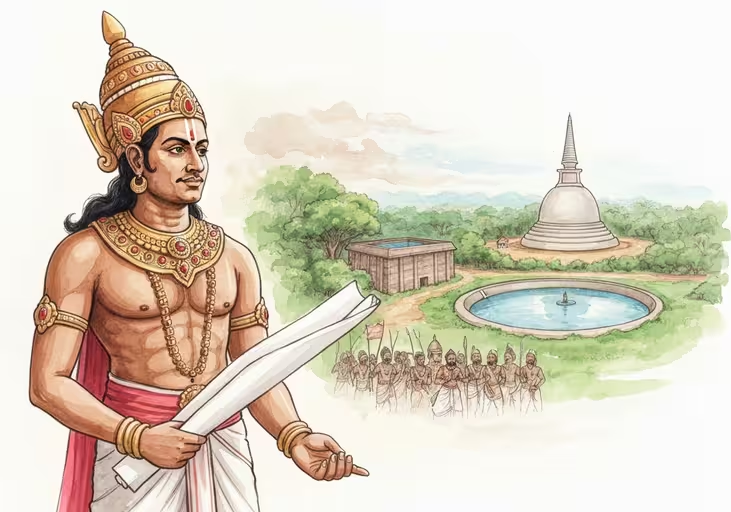
King Upatissa: A Pioneer of Early Sri Lankan Kingship
Introduction
According to the Mahavamsa, Upatissa is a very important figure in the history of Sri Lanka. He served as the chief royal minister of King Vijaya, who is considered the first king of the country, and made a significant contribution to laying the initial foundation of kingship in the land.
Early Life and Role
Information about Upatissa is largely derived from the Mahavamsa. From the time King Vijaya arrived from India and sought to establish a kingdom in Lanka, Upatissa was his most trusted and principal minister. He played an important role in directing state affairs throughout King Vijaya’s reign and directly contributed to state administration and decision-making processes. His leadership and foresight were a great support in stabilizing King Vijaya’s rule.
The City of Upatissagama
The construction of the city “Upatissagama” is considered Upatissa’s foremost and most notable achievement. This city held an important place among the early settlements of Lanka, and its construction demonstrates Upatissa’s capability in urban planning and his dedication to developing the country. It is believed that Upatissagama functioned as an important center of the early Sri Lankan kingdom. Naming this city after him further emphasizes his service to Sri Lankan history.
Governance and Legacy
The mention of “King Upatissa” in the Mahavamsa suggests that he had the opportunity to lead the country after the demise of King Vijaya. Although he was not a crowned king of early Sri Lankan royalty, his role in formalizing kingship and establishing new settlements for the people was immense.
King Upatissa’s legacy lies in his contribution to establishing a stable rule and building a new city during the nascent stages of the Sri Lankan kingdom, within a challenging environment. Without his leadership and contributions, King Vijaya’s rule might not have been as successful, and a city like Upatissagama might not have come into existence. Thus, Upatissa is an important figure who took the first steps in early Sri Lankan state culture and urbanization.