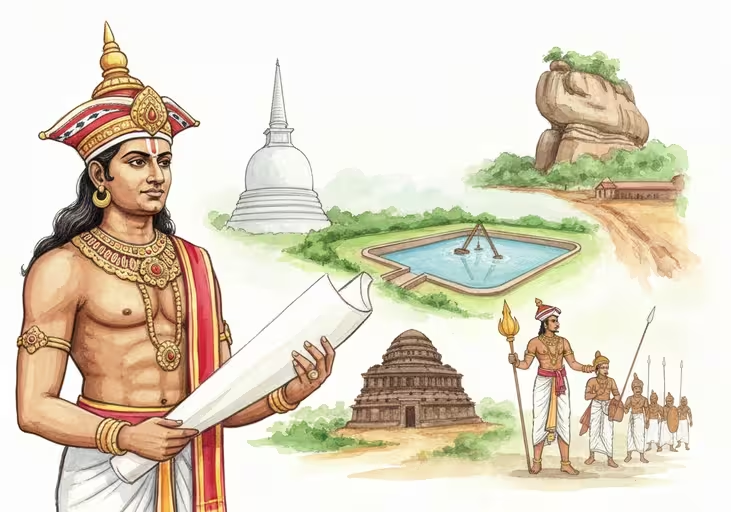
Suratissa was an early Sri Lankan king of the Anuradhapura Kingdom, who held sovereignty for ten years in the ancient capital of Anuradhapura from 247 BCE to 237 BCE. He was an important ruler during the Anuradhapura period, and his reign marks a significant turning point in Sri Lankan history.
Early Life and Ascension to the Throne
King Suratissa was a younger son of King Pandukabhaya. He was the brother of King Mutasiva and belonged to the royal family that ruled Anuradhapura, the most powerful kingdom in Sri Lanka at the time. In 247 BCE, he ascended the throne of Anuradhapura.
Reign
King Suratissa ruled the Anuradhapura Kingdom for a period of ten years, from 247 BCE to 237 BCE. Although detailed information about his reign is not extensively recorded in sources, it can be presumed that he ruled peacefully, except for the final event.
Demise and Historical Significance
King Suratissa’s reign abruptly ended with an invasion launched by two South Indian Tamil invaders, Sena and Guttika. These invaders defeated and killed the king in battle, seized the Sinhala throne, and became the joint rulers of Anuradhapura.
This marks the first historically recorded instance of Tamil rule in the history of Sri Lanka. Sena and Guttika ruled Anuradhapura for twenty-two years, and Sinhala rule was re-established in 215 BCE by King Asela. King Suratissa’s defeat set an important precedent for the island’s future political and ethnic relations.
Legacy
King Suratissa’s legacy is primarily marked by the historical event that occurred during his reign. He became one of the first Sinhala kings to face South Indian influences, a theme that recurred throughout Sri Lanka’s later history.