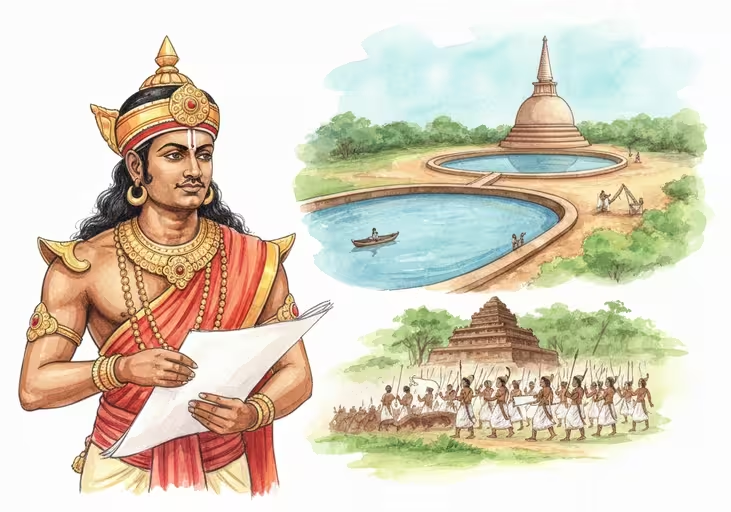
King Parakramabahu IV, son of King Bhuvanekabahu II, ascended the throne of Sri Lanka in 1302 CE, making Kurunegala his capital. He holds an important place in history as a great monarch who led a brilliant rule during the Kurunegala era. He was also known as King Pandita Parakramabahu due to his immense service in developing Buddhism and scholarly activities.
Reign and Contribution
King Pandita Parakramabahu reigned for a period of 24 years, from 1302 CE to 1326 CE. His reign is considered a golden age of the Kurunegala Kingdom. The king made a unique contribution to the religious, educational, and cultural development of the country. He worked with great dedication for the upliftment of Buddhism and provided extensive patronage for the advancement of the scholarly field.
Key Services and Achievements
Several notable services rendered during the reign of King Pandita Parakramabahu are listed below:
Service to the Sacred Tooth Relic
The king, who had great devotion to the Sacred Tooth Relic, built a Temple of the Tooth Relic in Kurunegala. Furthermore, villages were dedicated to provide the necessary funds and resources for the protection and maintenance of the Sacred Tooth Relic. By commissioning the writing of “Dalada Siritha,” an important work in Sinhala literature, he bequeathed the history and rituals of the Sacred Tooth Relic to future generations.
Contribution to Literature and Education
The king made a significant contribution to the development of literature and education. Prominent among these was his patronage for the translation of “Jataka Potha,” a major text in Buddhist literature, into Sinhala. He also patronized the writing of historical and religious books such as “Sinhala Bodhi Vamsa” and “Anagata Vamsa”.
In particular, Vidagama Ghanananda Pirivena and Totagamuwe Vijayaba Pirivena, which were renowned educational institutions at the time, received his abundant support and patronage. The king was a great support in disseminating scholarly knowledge through these pirivenas.
Construction of Religious Sites
Among the king’s religious services, the establishment of the Asgiri Senasanaya in Kandy is also significant. This became a major Buddhist monastery in Sri Lanka.
End of Reign
The reign of King Pandita Parakramabahu ended in 1326 CE. After him, kings Bhuvanekabahu III and Vijayabahu V ruled the Kurunegala Kingdom until 1349 CE. However, the reign of King Pandita Parakramabahu is considered a brilliant period of the Kurunegala era.