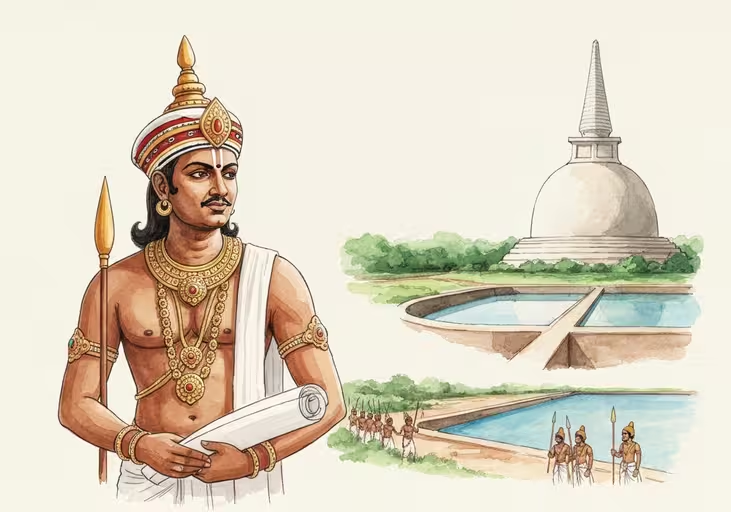
King Mutasiva
Introduction
King Mutasiva was one of the early kings of the Anuradhapura Kingdom, who ruled for sixty years from 367 BCE to 307 BCE, with the ancient city of Anuradhapura as his capital. The son of King Pandukabhaya, he inherited one of the longest and most peaceful reigns in Sri Lankan history.
Reign
King Mutasiva’s reign extended for sixty years. This period was an exceedingly peaceful era for the Anuradhapura Kingdom. The absence of records of any wars or major internal conflicts demonstrates the stability and success of his rule. This peaceful environment greatly contributed to the development of the kingdom and the prosperity of its people.
Family
King Mutasiva was the son of King Pandukabhaya, an important ruler of the Anuradhapura Kingdom. He had nine sons, several of whom later ascended the throne as kings of Anuradhapura. Among them, King Devanampiya Tissa, King Uttiya, King Mahasiva, and King Asela are prominent. His sons’ reigns ensured dynastic continuity and stability. Notably, King Devanampiya Tissa holds an important place in history as the pioneer who introduced Buddhism to Sri Lanka.
Creations and Contributions
A key achievement of King Mutasiva mentioned in historical records is the creation of the Mahamevnawa Park in Anuradhapura. This park later became a central point for the spread of Buddhism in Sri Lanka. Creating such a public space during a peaceful reign demonstrates his foresight and concern for the well-being of his people.
Legacy
King Mutasiva’s sixty-year peaceful reign bequeathed a stable and prosperous kingdom to succeeding generations. The ascension of several of his sons to the throne ensured dynastic stability, and his foundation significantly helped in making the reign of King Devanampiya Tissa, in particular, a golden age in Sri Lankan history.