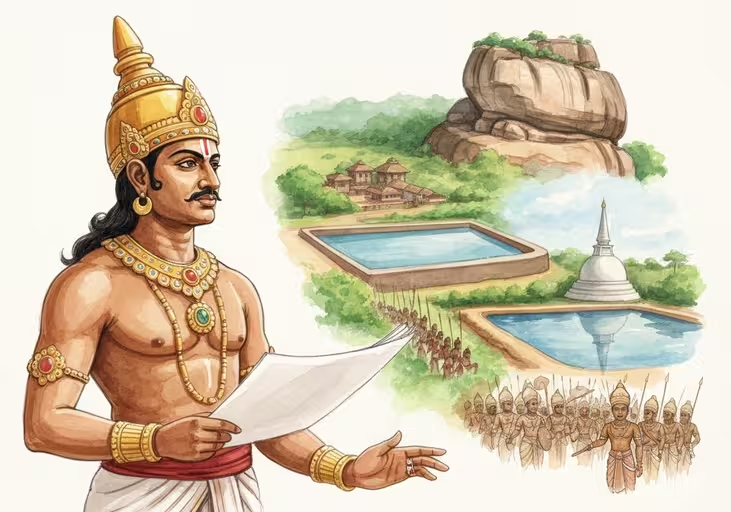
King Lanjatissa
King Lanjatissa was a ruler of the Anuradhapura Kingdom in Sri Lanka and the eldest son of King Saddhatissa. His reign extended from 119 to 109 BCE. He became a prominent figure in Sri Lankan history due to the complex events surrounding his ascension to the throne and the important religious activities he subsequently undertook.
Ascension to the Throne
After King Saddhatissa, the kingship of Lanka was rightfully due to Prince Lanjatissa, the eldest son. However, due to prevailing political and religious influences at the time, especially the intervention of the Sangha, the throne was given to the second son, Prince Thullatthana. Nevertheless, before a month had passed since Thullatthana ascended the throne, Prince Lanjatissa killed his brother and secured royal power.
Reign and Religious Services
Overcoming the initial unrest that followed his ascension to the throne after killing his brother, King Lanjatissa later reconciled with the Sangha. This reconciliation was a great support for religious activities during his reign. He undertook many very important construction and development works for the Buddha Sasana:
- Construction of three stone flower altars at Ruwanweliseya: He arranged for the construction of three stone flower altars at Ruwanweliseya, one of the greatest stupas in Anuradhapura, for offerings to the Buddha. This is a strong mark of his devotion and religious service.
- Construction of a stone stupa to the east of Thuparamaya: King Lanjatissa patronized the construction of another stone stupa to the east of Thuparamaya, which is considered the first stupa in Sri Lanka. This demonstrates his interest in the Buddhist architecture of the time.
- Construction of Girikumbhila Vihara: The construction of Girikumbhila Vihara, adding a new monastery to the Buddha Sasana, also took place during his reign. This reflects his dedication to spreading Buddhism throughout the country and providing residences for monks.
Legacy
Although King Lanjatissa adopted a revolutionary method to ascend the throne, he later reconciled with Buddhism and the Sangha, making significant contributions to the religious and cultural development of the country. His constructions remain immortal marks of Sri Lanka’s Buddhist heritage today. He is considered an important king in Sri Lankan history due to his services to the Sasana.