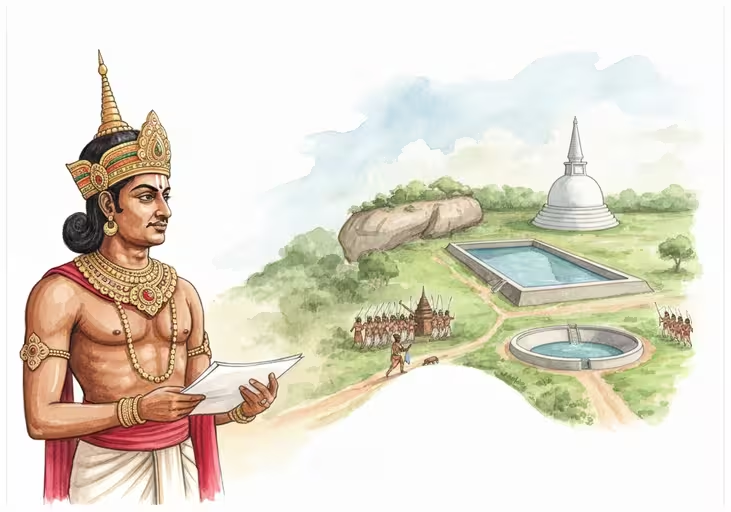
King Jayabahu II
King Jayabahu II, who ruled the Kingdom of Kotte, represents a short but significant chapter in the history of Sri Lanka. Grandson of King Parakramabahu VI, he ascended the Kotte throne during a period when the kingdom faced political instability. His reign was limited to two years, which demonstrates the intensity of the power struggles within the Kingdom of Kotte.
Early Life and Accession to the Throne
Prince Jayabahu II was the son of the daughter of King Parakramabahu VI, a great and powerful ruler of Kotte. Following the demise of King Parakramabahu VI in 1467, Prince Jayabahu ascended the royal throne of Kotte as his legitimate successor, adopting the name “Jayabahu II”. This ascension confirmed the continuity of the Kotte dynasty and the hereditary succession.
Reign and Loss of the Throne
The reign of King Jayabahu II was limited to a short period from 1467 to 1469 CE. During this brief time, he faced a formidable challenge. Prince Sapumal, the ruler of Jaffna, was angered by not receiving the kingship himself. Prince Sapumal came to Kotte, deposed King Jayabahu II, and killed him. In 1469 CE, Prince Sapumal ascended the throne as the new king of the Kotte Kingdom, under the name “Bhuvanekabahu VI”.
Legacy
The short reign of King Jayabahu II provides a clear picture of the internal political struggles and intense competition for power within the Kingdom of Kotte. His rule marked a break in dynastic succession and the rise of a new ruler, which had a significant impact on later Kotte history. His name remains recorded in Sri Lankan history as an unfortunate king who, though for a brief period, ascended the throne.