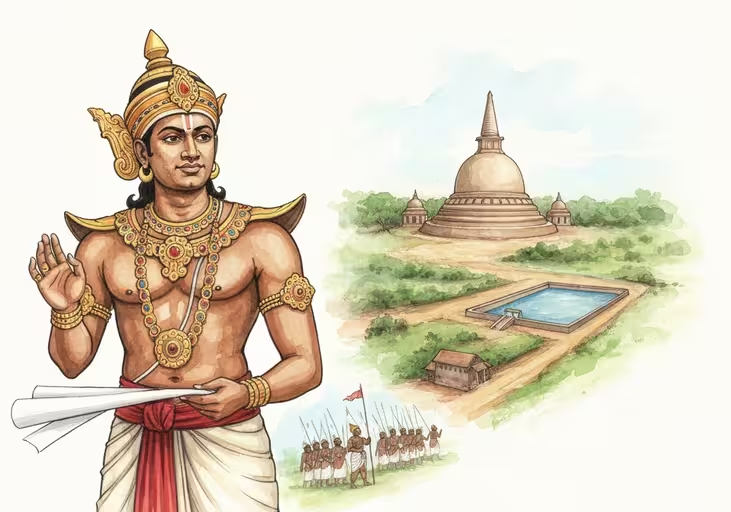
King Buwanekabahu I ascended to the throne of Sri Lanka in 1272 CE. He succeeded King Bosath Vijayabahu, also known as Vijayabahu IV, and his reign lasted for 12 years until 1284 CE.
Accession to the Throne and the Yapahuwa Kingdom
After ascending the throne, King Buwanekabahu I, unlike previous kings, moved to Yapahuwa fortress and established it as his main capital, from where he conducted state affairs. This decision was a strategic step taken to face the political and security challenges of that era.
Administration and Challenges
During his reign, King Buwanekabahu I faced numerous challenges. The Vanni chieftains, who were loyal to King Bosath Vijayabahu, rose against his rule, and the Nayakas gathering in the North also posed a significant threat to the king. Despite these challenges, the king endeavored to govern the kingdom peacefully and stably.
During his reign, special attention was paid to the Buddhist Sasana. The king organized annual Upasampada ceremonies and worked towards the long-term preservation of the Buddha Sasana.
Seizing of the Sacred Tooth Relic and the King’s Demise
King Buwanekabahu I passed away in 1284 CE. After his death, Sri Lanka had to face another immense challenge. It is mentioned in the second part of the Mahavamsa that at this time, Arya Chakravarthi, a minister of the Pandyan king Kulasekara, led a large army to besiege Yapahuwa and seized the Sacred Tooth Relic. This event marked a significant turning point in the history of Sri Lanka.
After the Reign
After the death of King Buwanekabahu I, there was a period of anarchy in Sri Lanka for approximately three years. Following this unstable period, King Parakramabahu III ascended the throne.